My last blog ended with a statement that I was next going to write about Native Americans’ responses to Northern Midwest sulfide mineral mining and offer indications as to how miners could approach new sulfide mineral mines to mitigate the concerns of Native Americans. Articles on resource policy and the regulatory aspects of mining are instructive as to Native American concerns, but in some cases, there does not appear to be ways to mitigate their opposition to sulfide mineral mining.
A 2025 article by Deberdt and others in the journal Resources Policy concluded that independent monitoring has provided post-operating acceptance of Michigan’s sulfide mineral Eagle Mine.
In 2020 the American Bar Association’s publication Natural Resources & Environment included an article written by Dennis J. Donahue and Daniel P. Ettinger that examined how Native Americans have interacted with the myriad state and federal environmental reviews and permits that apply to sulfide mineral mining. They noted that in the case of Minnesota’s NorthMet sulfide mineral mining project, participation by Native Americans in extensive environmental review and consultation did not mitigate tribal opposition to the project.
Conditional acceptance of mining is possible
Deberdt’s article stresses the fact that when mining can proceed that public acceptance is conditional and depends on continuing efforts by the mine operator. It notes that a significant contribution to the acceptance of the Eagle Mine has been the existence of an independent environmental monitoring program.
Prior to the beginning of mining at the Eagle Mine in 2014, the owner of the mine signed an agreement for independent monitoring of water and air of the Eagle Mine. The most recent extension of this agreement, Community Environmental Monitoring Program (CEMP), was signed in December 2025.
In December 2025 the Community Foundation of Marquette County issued the following press release.
The Community Environmental Monitoring Program – or CEMP – agreement continues the work between Eagle Mine LLC, Superior Watershed Partnership, and the Keweenaw Bay Indian Community to maintain their longstanding commitment to transparency, environmental stewardship, and community engagement. Under the renewed terms, Eagle Mine will provide financial support to CEMP activities, with the Community Foundation managing the grant to SWP [Superior Watershed Partnership] and KBIC [Keweenaw Bay Indian Community] for monitoring implementation. The agreement currently extends through December 31, 2027, or until the conclusion of Eagle Mine’s operations.
Native Americans’ views on the significance of the CEMP were stated in an interview in January 2020. KBIC Natural Resources Department Director Evelyn Ravindran said, “The monitoring [CEMP monitoring] conducted includes baseline assessments as well as continued monitoring to ensure things are still going well for the environment and protecting our foods that are on the landscape, [and] the rights of other beings in the landscape.”
Mining companies need to lead
The primary recommendation in Donahue and Ettinger’s article is that mining companies take proactive steps early in mining project development to make good faith efforts to address the Native Americans’ concerns. They point out that both federal and state governments have limited resources and different interests from a developer, and mining companies have more information on their projects than government entities. Because mining companies have the most information on their proposed mines, they should take ownership over how local communities receive the projects.
Native Americans’ participation in the regulatory permit process
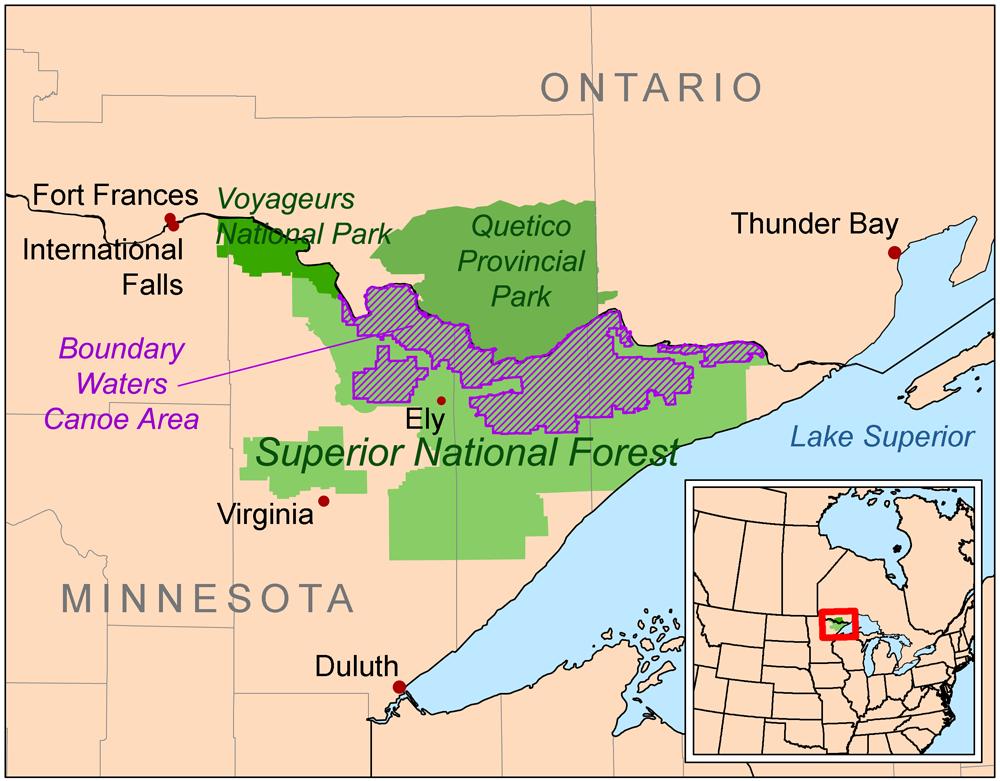
Donahue and Ettinger also cited the example of the NorthMet Project in northern Minnesota where Native Americans (Fond du Lac Band of Lake Superior Chippewa, the Bois Forte Band of Chippewa, and the Grand Portage Band of Lake Superior Chippewa) served as consulting parties in the environmental process review under the National Environmental Policy Act (NEPA) and Minnesota Environmental Policy Act (MEPA). However, although this multiyear consulting process resolved potential adverse effects to a sugarbush site in the project that had been used in the past by tribal members for sugaring, the Tribes continued their opposition to the project in their belief that the NorthMet Mine would damage wild rice. Wild rice is an essential spiritual, economic, and material resource for Native Americans.
The failure of the regulatory mandated consulting process for the NorthMet Project illustrates that although Native Americans’ may enter the consulting process, this process does not guarantee that that Native Americans’ concerns will be addressed through the regulatory consulting process.
Articles referenced in this blog
Donohue, Dennis J., and Daniel P. Ettinger. “Navigating Tribal Opposition to Permits for Great Lakes Mining Projects: Obstacles and Opportunities.” Natural Resources & Environment (Washington, D.C.) 35 (Summer 2020): 41–44. https://www.jstor.org/stable/27010647?seq=3
Deberdt, Raphael, Nicole M. Smith, Aaron Malone, and Robin Bullock. “From Opposition to Conditional Acceptance: Corporate Environmental and Scio-Economic Engagement in Critical Mineral Mining in Michigan.” Resources Policy (Amsterdam, Netherlands) 110, no. 105760 (2025). https://ideas.repec.org/a/eee/jrpoli/v110y2025ics0301420725003022.html.
Next Blog
My next blog will focus on the NorthMet Project, which has struggled for over twenty years to obtain a mining permit.
My last blog ended with a statement that I was next going to write about Native Americans’ responses to Northern Midwest sulfide mineral mining and offer indications as to how miners could approach new sulfide mineral mines to mitigate the concerns of Native Americans. Articles on resource policy and the regulatory aspects of mining are instructive as to Native American concerns, but in some cases, there does not appear to be ways to mitigate their opposition to sulfide mineral mining.
A 2025 article by Deberdt and others in the journal Resources Policy concluded that independent monitoring has provided post-operating acceptance of Michigan’s sulfide mineral Eagle Mine.
In 2020 the American Bar Association’s publication Natural Resources & Environment included an article written by Dennis J. Donahue and Daniel P. Ettinger that examined how Native Americans have interacted with the myriad state and federal environmental reviews and permits that apply to sulfide mineral mining. They noted that in the case of Minnesota’s NorthMet sulfide mineral mining project, participation by Native Americans in extensive environmental review and consultation did not mitigate tribal opposition to the project.
Conditional acceptance of mining is possible
Deberdt’s article stresses the fact that when mining can proceed that public acceptance is conditional and depends on continuing efforts by the mine operator. It notes that a significant contribution to the acceptance of the Eagle Mine has been the existence of an independent environmental monitoring program.
Prior to the beginning of mining at the Eagle Mine in 2014, the owner of the mine signed an agreement for independent monitoring of water and air of the Eagle Mine. The most recent extension of this agreement, Community Environmental Monitoring Program (CEMP), was signed in December 2025.
In December 2025 the Community Foundation of Marquette County issued the following press release.
The Community Environmental Monitoring Program – or CEMP – agreement continues the work between Eagle Mine LLC, Superior Watershed Partnership, and the Keweenaw Bay Indian Community to maintain their longstanding commitment to transparency, environmental stewardship, and community engagement. Under the renewed terms, Eagle Mine will provide financial support to CEMP activities, with the Community Foundation managing the grant to SWP [Superior Watershed Partnership] and KBIC [Keweenaw Bay Indian Community] for monitoring implementation. The agreement currently extends through December 31, 2027, or until the conclusion of Eagle Mine’s operations.
Native Americans’ views on the significance of the CEMP were stated in an interview in January 2020. KBIC Natural Resources Department Director Evelyn Ravindran said, “The monitoring [CEMP monitoring] conducted includes baseline assessments as well as continued monitoring to ensure things are still going well for the environment and protecting our foods that are on the landscape, [and] the rights of other beings in the landscape.”
Mining companies need to lead
The primary recommendation in Donahue and Ettinger’s article is that mining companies take proactive steps early in mining project development to make good faith efforts to address the Native Americans’ concerns. They point out that both federal and state governments have limited resources and different interests from a developer, and mining companies have more information on their projects than government entities. Because mining companies have the most information on their proposed mines, they should take ownership over how local communities receive the projects.
Native Americans’ participation in the regulatory permit process
Donahue and Ettinger also cited the example of the NorthMet Project in northern Minnesota where Native Americans (Fond du Lac Band of Lake Superior Chippewa, the Bois Forte Band of Chippewa, and the Grand Portage Band of Lake Superior Chippewa) served as consulting parties in the environmental process review under the National Environmental Policy Act (NEPA) and Minnesota Environmental Policy Act (MEPA). However, although this multiyear consulting process resolved potential adverse effects to a sugarbush site in the project that had been used in the past by tribal members for sugaring, the Tribes continued their opposition to the project in their belief that the NorthMet Mine would damage wild rice. Wild rice is an essential spiritual, economic, and material resource for Native Americans.
The failure of the regulatory mandated consulting process for the NorthMet Project illustrates that although Native Americans’ may enter the consulting process, this process does not guarantee that that Native Americans’ concerns will be addressed through the regulatory consulting process.
Articles referenced in this blog
Donohue, Dennis J., and Daniel P. Ettinger. “Navigating Tribal Opposition to Permits for Great Lakes Mining Projects: Obstacles and Opportunities.” Natural Resources & Environment (Washington, D.C.) 35 (Summer 2020): 41–44. https://www.jstor.org/stable/27010647?seq=3
Deberdt, Raphael, Nicole M. Smith, Aaron Malone, and Robin Bullock. “From Opposition to Conditional Acceptance: Corporate Environmental and Scio-Economic Engagement in Critical Mineral Mining in Michigan.” Resources Policy (Amsterdam, Netherlands) 110, no. 105760 (2025). https://ideas.repec.org/a/eee/jrpoli/v110y2025ics0301420725003022.html.
Next Blog
My next blog will focus on the NorthMet Project, which has struggled for over twenty years to obtain a mining permit.