

Profile of Blog Author and Publisher
I hold bachelors and master’s degrees in geology from Michigan State University. My professional credentials include being recognized as a Certified Professional Geologist (CPG) by the American Institute of Professional Geologists (AIPG) and a Certified Petroleum Geologist (CPG) by the American Association of Petroleum Geologists (AAPG). My business experience includes serving as a corporate officer in a publicly traded company, a privately held company, and a limited partnership. I have testified before the Michigan Public Service Commission, the Federal Energy Regulatory Commission, and the National Energy Board (since 2019 the Canadian Energy Regulator).
My first job as a geologist was looking for copper, nickel, and other nonferrous metals for United States Steel in the Boundary Waters Canoe Area in Minnesota and the area north of Marquette, Michigan.
Our team did not find any deposits but soon after our attempt, United States Steel did locate a deposit of sulfide minerals in Minnesota and began drilling on their NorthMet project in 1969. After my brief stint with United States Steel, I proceeded to work doing oil and gas geology and then at various business jobs. After I left my job as Vice President of Energy Supply and Marketing with the Midland Cogeneration Venture Limited Partnership in 2004, I began writing and lecturing on a variety of technical and business topics. Some of this work was as a consultant and other was simply as an independent activity. Despite the different activities I have pursued in my life, I remained fascinated with the idea that new mining could be done in the northern Midwest for sulfide minerals containing copper, nickel, cobalt, and other minerals.
In 2016 I gave a series of lectures at Saginaw Valley State University on the sulfide mineral deposits found at the Back Forty, Eagle, Eagle East, and Copperwood deposits. Preparing these lectures, I became interested in the fact that in spite of the delineation of many sulfide mineral deposits in Minnesota, Wisconsin, and Michigan, as of 2016 sulfide mineral mining had taken place only at locations at the Flambeau deposit in Wisconsin and the Eagle and adjacent Eagle East deposits in Michigan, and the White Pine Mine in Michigan.
A seemingly disconnected project from the permitting of sulfide mineral mining was my writing a book about a failed nuclear project in Midland, Michigan (Nearly Nuclear – A Mismanaged Energy Transition published by Michigan State University Press in 2021). Nearly Nuclear focused on the conflicts that occurred between the executives of Consumers Power and the Dow Chemical Company who wanted to build two large nuclear reactors in Midland, Michigan and local people that did not want these reactors built where they lived. What could not be found was an acceptable agreement (often called a social contract) between the pro-nuclear and the anti-nuclear groups.
As I studied the geology of sulfide minerals in the Northern Midwest, I observed the failure to reach a social contract between people who want to dig mines and those who oppose sulfide mineral mining. Each sulfide mineral deposit has its unique setting and proposed method of mining and milling the ore, but wherever a sulfide mineral mine is proposed Native Americans, conservationists, and environmentalists oppose the permitting of the mine.
Sulfide Mineral Mining in the Northern Midwest – Claims of miners, Native Americans, Conservationists, Environmentalists, and the rest of us is the working title of a book manuscript I have prepared to describe the failures, no matter what the details are of a proposed mine, to reach consensus on mining the valuable sulfide mineral resources in the northern Midwest.
Blog & News
Insights on sulfide mineral mining, energy projects, and community impacts in Michigan, Wisconsin, and Minnesota.
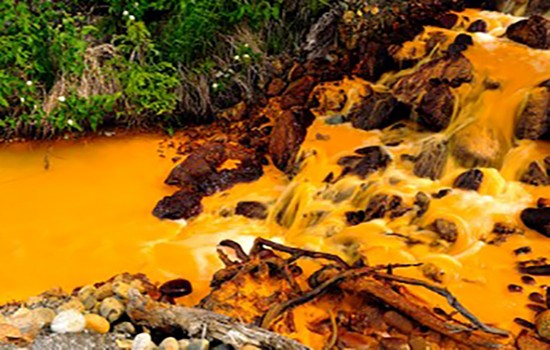
The abandoned Tulsequah Chief Mine in northwestern British Columbia has leaked toxic,...

Image: Lake of the Clouds in the Porcupine Mountains Wilderness State Park...
